

High-flying careers start here
Supercharge your applications and beat the competition







Latest on Forum
View forumTrending Discussions

How to Pass HireVue & Pymetrics Games

Big Four post more job ads for AI specialists than auditors
Which Retail Brokerage Should You Use in 2026 in London/Europe?
Latest Company Reviews
All company reviews


Latest Interview Reviews
All interview reviews


Latest Salaries
All salaries
Latest Podcasts
All episodesNews
All articlesBig Four post more job ads for AI specialists than auditors
The Big Four accounting firms now post more job adverts for AI specialists than for auditors, a structural shift that puts the UK’s assurance industry, its regulator, and the medium-term value chain of professional services under quiet but

Global M&A megadeals surge to a record in first quarter
Global mergers and acquisitions reached $1.2tn in the first quarter, driven by a surge in megadeals despite geopolitical tensions and unease in the technology sector.
Inside one of the wildest days the oil market has ever seen
How one London trading floor coped with a record swing in prices
General
All articlesHow to Pass HireVue & Pymetrics Games
HireVue and PyMetrics (often called Pymetrics) represent a major evolution in modern recruitment. In 2022, HireVue acquired Pymetrics and integrated its popular game-based assessments into their AI-powered hiring platform. Today, candidates

How to Write Cover Letters for Spring Weeks in the UK and Europe
Spring Weeks (also known as Insight Weeks, Spring Internships, or Off-Cycle Programmes) represent one of the most powerful early-career gateways into investment banking, private equity, hedge funds, asset management, and sales & trading acr

The Secret to Success: Power
Power leads to success. If you don't understand corporate politics, people less talented than you will take your promotion. Most people wait for permissions, direction, and to be told what to do. Power favours those who move first.
Spring Weeks
All articles
How to Ace a Spring Week
Congratulations! You secured the offer and now you want to impress to get the summer internship and, eventually, the full-time job.

How I Got 20 Internships - And It Wasn’t Privilege
I have now been at over 20 institutions for work experience within the Finance industry. People always ask me “does your dad know someone in the industry?”. My dad is a barber and my mum doesn’t work due to illness...so no.

Your Sole Purpose as an Intern - Be Reliable, Not a Rockstar
So you’ve looked at the various careers paths within financial services, and you’re considering Sales as an option. There are several specific traits that successful salespeople have, either naturally or they have developed them over time.
Summer Internships
All articles
IBD Summer Analyst Technical Interviews - Introduction
Introduction In the fiercely competitive world of investment banking, securing a summer analyst position can be a significant step towards a successful career. One crucial aspect of the interview process for such roles is the technical ques

Top 5 Do’s and Don’ts as a Summer Intern
Next year’s intake are now starting to apply for 2017 summer internships and the process of interviews and cover letters has begun. If you are lucky enough to secure your place on a coveted summer internship, then there are certain pieces o
Surefire Ways To Not Get a FT Return Offer
There is a lot of information out there on how to turn your summer internship into a full time offer, but in this post I would like to share with you the 7 things you could do to mess up your chances of getting a full-time offer.
MBA
All articles
Acing the GMAT Exam
Once you have decided to go for an MBA you will have probably understood that the score in your GMAT (Graduate Management Admission Test) is quite important in the application process.

Getting Admitted to a Top MBA Programme
If there is one single piece of advice that I can give is to start your MBA journey early, ideally 18-24 months before you are planning to start you MBA.

Choosing The Right MBA Programme For You
I wanted to give you some help in deciding which MBA to choose (assuming that you have already decided to go for an MBA). As the degree is quite expensive, it is important to choose wisely and pick an MBA that helps you to fulfil your aspir
Investment Banking
All articles
What is Restructuring/Special Situations Group?
If you picture investment banking as a parade of glossy pitchbooks and “strategic alternatives” for healthy companies, Restructuring (often paired with Special Situations) is the part of the bank that shows up when the math stops working.

What is a Demerger?
If you've been following the business headlines lately, you've probably seen companies announcing that they're "splitting up" or "spinning off" a division. What's actually happening behind these announcements is often a demerger, and if you
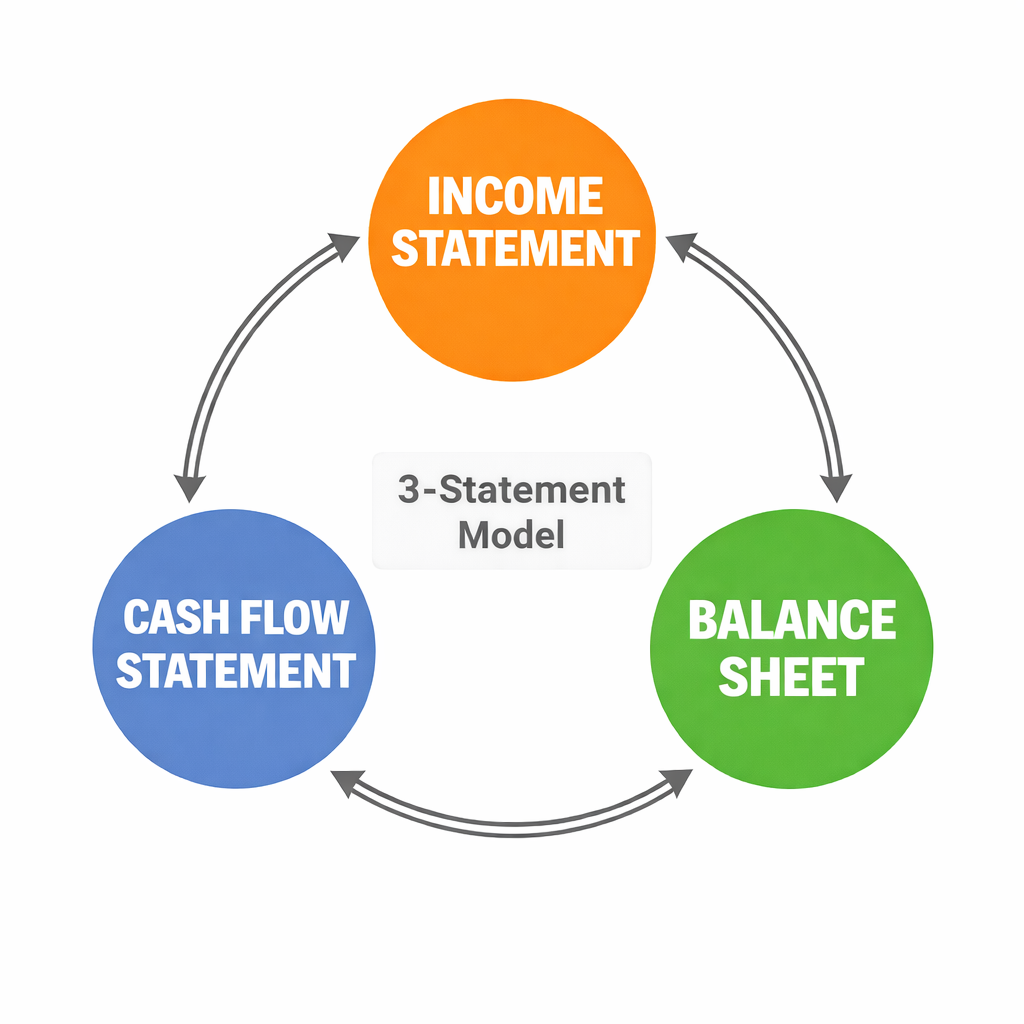
What is the 3-Statement Model?
In the high-stakes world of investment banking, where multimillion-dollar deals hinge on precise forecasts and razor-sharp analysis, one tool stands above the rest as the foundation of everything: the 3-Statement Model.
Global Markets
All articles
Intro to Options, Futures, and Other Derivatives
If you are preparing for a career on a trading floor or in a markets-facing role, you will hear the word derivatives constantly. The idea sounds intimidating because the math can get deep—but the economic intuition is something you can gras

Which Trading Desk Should I Choose in Global Markets/S&T?
Picking a desk in Global Markets is one of the most consequential decisions you'll make early in your sales and trading career. Unlike investment banking, where analysts generally rotate through generalist pools before specializing, S&T div

Introduction to Quantitative Finance
Quantitative finance, often referred to as "quant finance," is a dynamic field that merges advanced mathematics, statistics, computer science, and financial theory to solve complex problems in the financial markets. It emerged prominently i
Private Equity
All articles
Private Equity Salary Guide 2026 in London/Europe
Private equity (PE) compensation in London and broader Europe remains highly competitive in 2025, driven by factors like fund size, asset class, experience, and regional differences. Data from recent surveys shows that total compensation ty
Introduction to Private Equity
Private equity (PE) refers to investments made directly into private companies or buying out public companies to make them private, rather than investing in publicly traded stocks. These investments are typically made by private equity firm

Guest Post: BreakIntoPE.com - 5 Critical Communication Mistakes in PE Interviews (And How to Avoid Them)
The following is a post sponsored by BreakInToPE.com, the premier coaching service in the UK and EU for aspiring PE professionals.
Hedge Funds
All articles
Acing The Trade Idea Interview
So you have met the team and the hiring process is going well. You are getting close, but there’s still one major hurdle standing in your way: the dreaded Case Study. You will be asked to present on a stock and formulate an investment recom

I'm a Hedge Fund Analyst. Ask Me Anything
Hey, I've been asked to do an AMA on here, so fire away with any questions you may have (but don't bother asking salary). I'm also willing to give feedback on any CVs so send them my way if you want, though I probably won't get back to you
AMA: Analyst at $5B+ Credit HF Taking Your Questions
Beginning first year as an investment analyst at a $5B debt fund. Invest in global credit situations across the cap structure (senior loans, HY bonds, mezz and equity co-invests) in Europe and the US.
Consulting
All articles
Introduction to Big 3/MBB Consulting Careers (London/Europe)
In the competitive world of professional services, few career paths command as much respect, intellectual stimulation, and financial reward as strategy consulting at the "Big 3" — McKinsey & Company, Boston Consulting Group (BCG), and Bain
McKinsey Solve Games – what’s new in 2026
If you’re preparing for McKinsey right now, the first thing to understand is that most of the content out there is already outdated.

St. Gallen MBA to Accenture Lead to Elite Boutique
Lorettz shares his career journey across banking and consulting, starting with an international education in economics and strategy (University of Sussex, Stanford exchange, and a Master’s in Strategy & International Management from the Uni
Big Four
All articles
Introduction to Audit
One of the most underrated roles in finance are those in the so-called middle and back-office. It is generally looked down by those in revenue-generating, front-office roles and written off as low-quality professionals, it's also seen as un
Big 4 Salary Guide in London/Europe
The Big 4 accounting firms—Deloitte, PwC, EY, and KPMG—offer competitive salaries that vary by role, experience, qualifications (e.g., ACA, ACCA), department (e.g., audit, tax, advisory), and location. London typically commands a premium du
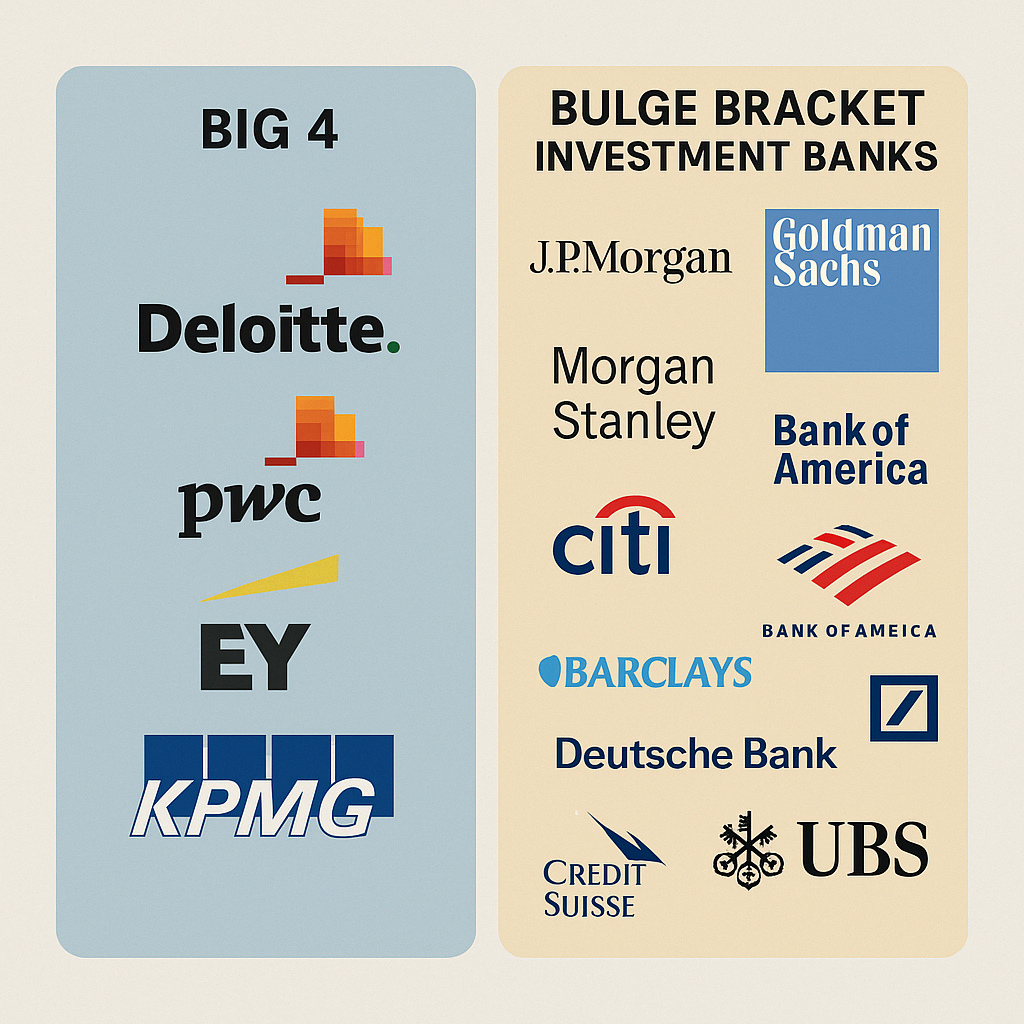
Big 4 vs Investment Banking
The financial services sector hosts two powerhouse groups: the Big 4 accounting firms—Deloitte, PwC, EY, and KPMG—and the Bulge Bracket investment banks like Goldman Sachs, JPMorgan Chase, Morgan Stanley, Citigroup, Bank of America Merrill
FinTech & Startups
All articles
Getting a Job in Bitcoins
In 2008, an anonymous developer with the pseudonym Satoshi Nakamoto introduced the world to the first cryptocurrency called bitcoin. Since 2009, the price of one bitcoin went from $0.01 to over $1,000 in late 2013 and is currently hovering

Switching Careers - From Banking To FinTech
Banking jobs in the UK have been on a steep decline since the financial crisis in 2008. According Business Insider, British banks alone have cut over 186,000 jobs since 2008.

FinTech or Banking
Getting a graduate job in banking became increasingly difficult since the 2008 financial crisis. And now, with Brexit, it has become even more difficult to secure a seat as a graduate trainee at an investment bank.
Venture Capital
All articles
How to Break in to Venture Capital Through Family Offices
A career in venture capital is often regarded as one of the most difficult paths to break into in finance. The industry appears closed, opaque, and dominated by a narrow group of former founders, investment bankers, and elite university gra
What is a Fair Equity Agreement For a Startup?
Determining a fair equity agreement for a new startup depends on several factors, including the startup’s stage, valuation, funding amount, market norms, and the roles or contributions of the parties involved (e.g., founders, employees, inv
What is Venture Capital?
The venture capital (VC) industry involves firms or individuals investing money in early-stage, high-potential startups or small businesses in exchange for equity (ownership stakes).
Asset Management
All articles
Building a Successful Investment Framework as a PM
Imagine you are an investor who wants to grow your wealth and achieve your financial goals. You have a lot of options to choose from, but you also face a lot of uncertainty and complexity in the market.

Day In the Life of a Global Macro Portfolio Manager
Hi, I’m Howard, and I’m a global macro fund manager at a large fund you probably have heard of. In this blog post, I’m going to share with you a day in the life of my job and give you a glimpse of what it’s like to invest in global markets

I Interned in Asset Management - Here’s What I Learned
This article is based on my personal experience as an intern working for a well-known Swiss bank in London. I feel I must begin by pointing out that this piece will probably be slightly biased, since I particularly enjoyed my time there.
Law
All articles
Magic Circle and Corporate Law Salaries in London/EMEA in 2026
The Magic Circle—comprising A&O Shearman, Clifford Chance, Freshfields Bruckhaus Deringer, Linklaters, and Slaughter and May—remains the gold standard for corporate law in London and a key player across the EMEA region. These elite UK-headq

What is the Magic Circle?
In the fast-paced world of investment banking and high finance, where deals worth billions can hinge on a single clause or regulatory nuance, one term commands immediate respect: the Magic Circle. For professionals across the EMEA region—pa
High-flying careers
start here
Latest on Forum
View forumTrending Discussions
How to Pass HireVue & Pymetrics Games
Big Four post more job ads for AI specialists than auditors
Which Retail Brokerage Should You Use in 2026 in London/Europe?
Latest Company Reviews
All company reviewsLatest Interview Reviews
All interview reviewsLatest Salaries
All salariesLatest Podcasts
All episodesNews
All articlesGeneral
All articlesSpring Weeks
All articlesSummer Internships
All articlesMBA
All articlesInvestment Banking
All articlesGlobal Markets
All articlesPrivate Equity
All articlesHedge Funds
All articlesConsulting
All articlesBig Four
All articlesFinTech & Startups
All articlesVenture Capital
All articlesAsset Management
All articles